
The Self-Contained Noticing Apparatus
Look at all the things we notice

Something funny happened. To both me and my friend Brent, at exactly the same time. We got tired of essays. We’re both tired of them. Both as readers, and as writers.
Brent has always been a writer, and has recently been invited into a serial writing project with our friend Ben Hunt on panoptica.com. The goal is to produce an essay every few weeks, taking turns with the other contributors to the project. After writing a few essays, Brent realized something: if I keep doing this, they’re all just going to be the same essay. Because every time I try to write something about the modern world or modern finance or modern culture, the same thing comes out.
Ben’s project, as with anything Ben touches, is full of excellent people, is well-designed, and is exceedingly thoughtful. But Brent realized his heart just isn’t in it. And it’s not because he has fallen out of love with writing. In fact the older he gets, and the older I get, the more we both love the process and the craft of writing. Our problem is that all nonfiction writing seems to be converging on a single format: point out how the modern age is ruining us, and make memes out of it. Nonfiction writing, like movies and social culture, is flattening. Now that everyone has access to all the same cultural touchstones all of the time, everyone writes the same things all of the time. Culture used to be lumpy, full of surprises. Now it’s all same-y, full of none.
I don’t know how we got so burned out at precisely the same time, but we did. And Brent is 17 years older than I, so his reading and writing journey has been significantly longer than mine. Which makes me think this isn’t a coincidence. I think we’re just in an environment that has so saturated us with written material that it’s no longer novel or interesting to be a constant reader of nonfiction. All of the low-hanging fruit is already in our basket, and most of the moderate-height fruit is too. Sometimes I feel like the only thing I haven’t read is the most abstract and useless of the field of philosophy.
It’s pretty rare that I read an essay these days and actually learn something. And that breaks my poor corazón1. What usually happens instead is that I hear an argument for or against a thing (usually against, because being against things is more fun) that I’ve already heard before, in slightly new words. And it usually includes words like “but actually,” “but in the modern age,” and “historically, this is not how humans lived.”
For just about any topic you can think of, I’ve read twenty or more essays, all worded differently, all saying basically the same four or five things in various levels of detail and pain. Things like “Technology bad,” or “Feminism bad,” or “Marriage good, actually,” or “Trust in our society is at an all-time low,” or “We live in a society where everything you do is surveilled, turned into a financial product, and sold back to you for profit.” Or there’s a response essay to a response essay to an original essay. And then you have to go back and read all three if you want to grasp the context, and I sort of just don’t care anymore. Because the ideas in there I’ve probably heard before, and it’s going to be another 45 minutes where I could have been outside walking or I could have been reading fiction.
It just feels like every time I read an essay now, I come away feeling empty. Like I noticed a little harder that the world as it is sucks, and that technology is making it harder to be a whole and unified human with a whole and unified family. Yes, I know that our culture is falling apart and that kids don’t play outside anymore. I know that. I honestly just don’t want to keep reading this stuff, because it depresses me just for the sake of depressing me. It puts me back on the carousel of “What if life were not like it currently is?” and imagining that all of the things that are broken were not in fact broken. It’s a ride that I don’t want to get on anymore. We just keep meme-ing cultural misery at each other and it doesn’t seem to me that we’re fixing anything.
I mean, think about it. Everything moves in cycles. Good times create weak men, et cetera. For anyone who has studied the history of any domain, this is patently obvious and unavoidable and, in some way, comforting. It means that none of our problems are unprecedented, and that there are natural consequences of where things currently are, and those consequences are what come next pretty much no matter what anyone does.
Do you think that if Substack didn’t exist, our culture would be any different at all than it is right now? If we didn’t have all these essays pointing out how our culture went too far one direction, would that impact how we’re now turning and heading back the other direction? I’m not sure it would. I’m not sure these essays are making a difference, really. And I wonder if other people can feel this thing in the air too. This over-essaying everything to death.
And so it wouldn’t surprise me if other people are reaching the same point Brent and I have reached.
I’m tired of the same old takes, spiels, rants, corrections, and actuallies. I’m tired of exciting titles on articles that say nothing. I’m tired of people getting famous for saying what ten thousand other people have already said, and getting told they are “brilliantly insightful” and “absolutely incredible” as writers. Contrary to how I felt when I first started writing, pointing out once again the things that suck about capitalism and technology and relationships is not heroic. A hero is someone who does something, not someone who describes something. I’m tired of seeing people with 50,000 paid subscribers say little more than “Hey, I noticed this broken thing about our society.” Yes, it makes me jealous, but mostly I’m tired of it because it’s stupid. It’s stupid to pay somebody $600,000 a year to keep saying that.
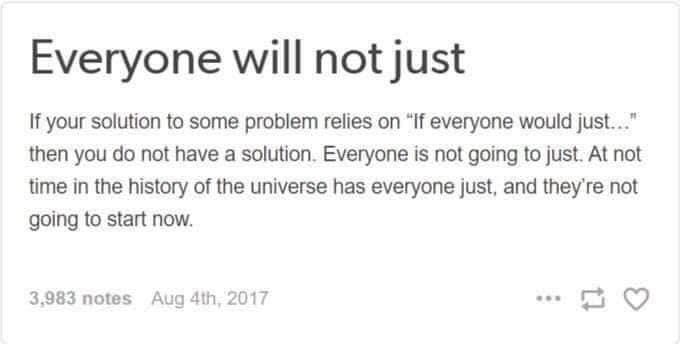
I’m tired of the fact that there’s a formula for essays just as much as there is a formula for the short-form video algorithm. All it takes to be successful on Substack is the Cultural Despair Gambit. You mention a problem that we’re collectively facing in society, you round up the usual suspects (technology, hyper-liberalism, government, the Sexual Revolution, the economy, women, men) and pin the blame on one of them, but then you turn and offer a vague way forward. “Our culture is going to shit, but wait! We can do something. If we would only just.” And after reading 5,000 of these essays and writing about 200 of them myself, I have come to realize that we will never just. No culture has ever just, and they’re not going to start now.
A few people will just. But most of us won’t. And perhaps that’s what I find so depressing. A few of us have the (or an) actual answer to most of our problems. For instance, the sexual revolution did ruin dating. Teenagers having smartphones is bad, actually. Feminism did go too far, actually. Wokeness did ruin higher education, actually. And men being men is a good thing, actually. And so a few readers will try harder to date smarter. A few readers will work harder to re-socialize their small worlds. A few readers will in fact log off and spend more time in the sun, saying hi to their neighbors. A few men will in fact read the essay and then embrace what makes them masculine and become better men for it. A few people will start pushing back against radicals in politics and culture and technology.
But most won’t. Most will just stay online and continue arguing about these things in more essays.
Cultural despair followed by a vague sense of cultural optimism. That’s the formula. That’s what 90% of essays are, and there are people getting totally rich writing them. And I’ve read some truly outstanding prose in these essays. Memorable and gorgeous prose that is genuinely enjoyable to read. But no matter how clever they are, no matter how beautiful the imagery is or how rereadable the prose, that’s more or less what they all say. And I’ve realized, at the same time as Brent, that I’m just tired of reading them. They don’t offer solutions. Or, they do, but those solutions are pipe dreams. Because society isn’t going to fix itself on the basis that the 500 of us who read a great essay are suddenly a little more enlightened. Society isn’t going to fix itself on the basis that a few of us now understand something utterly clearly. Because the other 349,999,500 of us still don’t get it and aren’t going to make any changes.
The incentive structures of our government are not going to change because a few people on Substack snapped and pointed at the computer screen like Leonardo Dicaprio and said “Yes! That’s it! That’s what’s broken!” Young men around the country are not going to stop watching porn and ruining their brains because 500 of us realize how bad it is. We can’t un-crank their hogs for them or magically grant them self-control. We can’t expect single twenty-somethings to stop having premarital sex or get back into church just because a few of us over here realized that they ought to. No matter how compelling our case against the sexual revolution is, it’s over. It’s done. The genie isn’t going back in the bottle, no matter how cleverly we notice the problem, no matter how hard we describe it.
And if we do move back towards a culture of conservatism and continence (which I think is already happening), it won’t be because we all reposted each other’s essays. It will be because that’s the natural consequence of living in a society where everybody, all the time, is having terrible sex with people they don’t even like and most kids are raised by single mothers and nobody can trust their partner because everyone is cheating on each other. The human population is a very large organism, and it has a will of its own, and the only solution to its own behavior is its own behavior. As they say in finance, the cure for high prices is high prices.
The only thing that can fix all of these issues is the healing of culture. And that’s not accomplished with internet posts, it’s accomplished by neighbors sitting in each other’s living rooms and taking an active interest in helping raise each other’s kids. It’s accomplished by couples staying together and loving each other, and putting their phones down during family time. It’s accomplished by sisters in the United States refusing to disown each other over what’s going on in Israel and Palestine.
To make matters worse, I’ve also realized that I have become addicted to these essays. And so is most of the audience on Substack. We scroll our feeds, sniffing for the next cultural despair essay like dope fiends looking under the stove for a forgotten pill or a crumb of crack. We can’t help it. Because, in the age of endless media, we have even turned reading into empty calories. I mean sure, there have always been rag tabloids and silly books and horrible manifestos, but those were read almost exclusively by lunatics. Now we all read nonsense all of the time. Not because we actively choose to read nonsense, but because we have an appetite to read and we brute force the algorithm to deliver. This is the material that keeps coming up, because this is the material that exists. Because we keep writing it, because we keep reading it.
We no longer await the serendipity of a great essay recommended to us by a friend or the hush-hush handoff of forbidden ideas after school. We no longer wait for great. We scroll for reading material and find a feeding trough. Myself included. And I’ve already been through addiction once, and I know what it feels like. It feels like this. I’m not having fun. I’m just injecting a bunch of nonsense into my body to stave off the boredom and withdrawal.
And it’s not like we’re treading new ground or playing with forbidden ideas here. If we were part of some underground society, that would be noble, that would be sexy. But we talk about all of the worst and most controversial things all the time, out in the open, because we have taken everything to its most extreme limit, including writing. At least we’re adult enough to openly talk about complicated things like sex and how to raise a healthy family in an extremely hostile technological environment. But that doesn’t necessarily butter any parsnips. Just because we notice doesn’t mean the problems are getting fixed. We’re just sitting around basking in the knowing — as if the knowing is worth something in and of itself. All the while, we’re getting more depressed and so are our kids, if we even have any, which half of us don’t.
We can’t stop reading how the world is going to shit but wait. It’s like an infomercial for our own futures — the ones you used to watch at 2 am when you couldn’t sleep, completely enthralled but knowing you were never going to buy the advertised product.
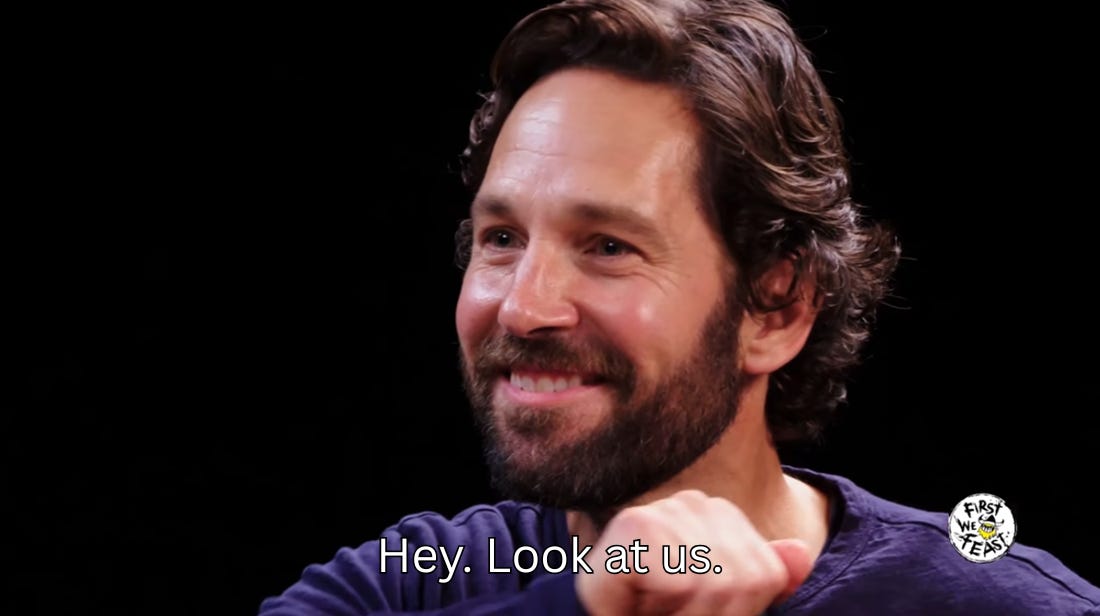
I’m tired of writing these essays, too. Sometimes I feel the only people we’re impacting are other writers. In other words, people who are already interested in being impacted. People who are interested in changing their minds and learning a new skill to actually put into practice. Substack, or writers’ circles in general, are sort of like a walled garden of ambitious caring. We desperately want to fix the ills of the world — we really do — but we can’t make the rest of the world care the way that we do. We’re participating in a self-contained Noticing Apparatus which doesn’t seem to have enough power to impact the outside world. So we just continue typing and scribbling and publishing all of the things we notice, and point them out to each other. Look at us noticing.
I’ve just grown tired of it; it’s not interesting anymore. I’m tired of reading that feminism and dating apps ruined relationships, even though they did. I’m tired of reading that smartphones ruined teenagers’ minds, even though they did. And I’m tired of reading that we live in a surveillance world where everything you do amounts to a performance and we’d all be happier without that, even though we do and we would.
I don’t know what this means for my writing, moving forward. I generally try to write practical essays anyway, not idle think pieces. So maybe this won’t affect my writing much. Perhaps this is a mood, like when Camus asked, “Should I kill myself, or have a cup of coffee?”
I’m back to reading fiction. I don’t know if I’ll ever be a writer of fiction — although I have stumbled ass-over-teakettle into a book idea which is something that has never happened to me before. All I can say is, nonfiction has just about expired for me. And I suspect that may start happening to many more people as we reach maximum capacity for realizations and noticings. I have swallowed so many hard-to-swallow realizations that I may need to have my stomach pumped.
“I’m afraid that sometimes you’ll play lonely games too. Games you can’t win ‘cause you’ll play against you.” - Dr. Seuss
—
Thanks to Brent Donnelly for reading a draft of this, and for being a Professional Noticer.
Leg.
Relatedly, I cannot subscribe to any more Substacks. The platform is becoming saturated with more and more writers and quasi (or occasionally real) celebrities joining each week. I don’t have the time for any more content, or the inclination to pay for any more content.
I’m sure many other people feel the same. Substack is going to hit a ceiling soon and its private equity backers might decide to amplify short form video and ruin the platform like every other platform has been ruined. I can only hope not.
Thank you for this. I'm a reader; not a writer. A fan of Brent and Brent's writing (even if he believes it's ok to use 'data' in the singular). I appreciate that you already publish....less than every day, and I'll look forward to reading what you write when you have something to say.
My Substack secret hack is to use the app as little as possible. I have whittled my subscriptions down to a select few and read in my email. I don't like scrolling endlessly for content, yet I find myself doing the thing I don't like when I'm on the app.